Customizable Family Tree
A Warm, Playful Design That Feels Like Home—Not Just Another Embroidery File
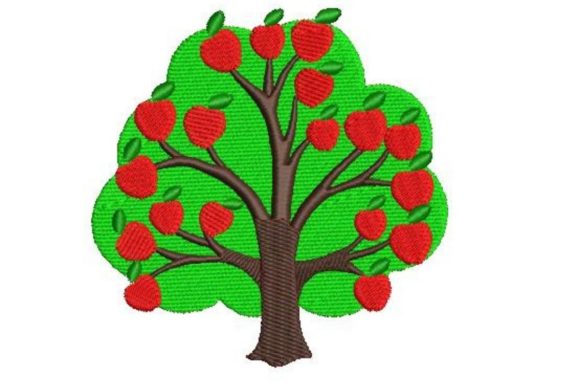
As someone who’s stitched hundreds of family-themed designs for clients—from boutique baby blankets to Etsy shop merchandise—I opened Customizable Family Tree expecting charm, but not quite this level of quiet intention. It’s not fussy or overly detailed. Instead, it’s a clean, rounded tree silhouette with apple-shaped accents that double as name placeholders. The branches curve gently, the trunk has subtle texture (not too dense), and the apples sit at natural intervals—not rigidly spaced, but thoughtfully balanced. It reads as handmade, even before stitching. That matters: when you’re selling personalized gifts or small shop products, first impressions shape perceived value before a single thread is cut.
Real Project Test: A Linen Tote Bag for a Local Mom Collective
Last week, I prepped Customizable Family Tree for a limited-run embroidered tote bag—linen blend, medium-weight, with a relaxed drape. I used three thread colors: warm taupe for the trunk, soft sage for leaves, and coral for the apples. The design scaled cleanly to 5.2" wide without distortion, and the stitch density felt intentional—not sparse enough to look unfinished, not heavy enough to stiffen the fabric. On the finished tote, the apples read as both decorative and functional: each one holds a name in simple block lettering (added manually in my embroidery software). Customers didn’t just see “a family tree”—they saw *their* family, quietly celebrated. That emotional resonance is rare in machine embroidery designs, especially ones marketed for kids. This one lands softly, sincerely.
Where It Shines—and Where It Asks for Thoughtful Choices
Customizable Family Tree fits naturally into custom apparel, nursery decor, and heartfelt gifting—but only when matched to the right context. On sweatshirt embroidery? Yes—if you use light-to-medium weight fleece and a tear-away + cut-away stabilizer combo. The fill stitches in the trunk hold well, and the satin-stitched apples don’t puddle or shift. On baby onesies? Proceed with caution: test stitch density on scrap knit first. The leafy areas use gentle fill stitch, not dense applique, so they’ll behave on stable interlock—but avoid ribbed or highly stretchy fabrics unless you’ve added lightweight fusible backing.
For embroidered patches or cap fronts? Not ideal out of the box. The curved branches and rounded apples lose definition on tight curves or small hoops under 4". If you need it for a cap, simplify the outer leaf clusters or reduce the overall width to 3.5". Same goes for tea towels or kitchen linens: the design breathes best on flat, low-pile cotton or linen. Avoid high-texture toweling—it swallows fine branch details and blurs apple outlines.
What You’ll Notice After Stitching—Not Just Before
The real strength of Customizable Family Tree shows up post-embroidery. No puckering on medium-weight cotton twill. Minimal thread nesting on the back—even with mixed thread weights (I used 40wt for trunk, 60wt for apples). And because the layout avoids tiny interior corners or overlapping satin stitches, there’s no risk of skipped stitches or thread breaks during long runs. That’s critical if you're producing for your craft business or fulfilling Etsy orders efficiently.
It also scales gracefully in mockups. I dropped the embroidery file into black-and-white printable mockups for a holiday gift listing—no color correction needed. The contrast held. On dark fabric? Use a bright, saturated apple color (like mustard or cobalt) and confirm your fill stitch density doesn’t fade into the background. A quick test on navy cotton duck proved it works—just add a touch more underlay in the trunk area for crispness.
Design Integrity Meets Commercial Practicality
This isn’t just a cute idea rendered in stitches. Customizable Family Tree functions like a flexible design asset—not a rigid template. You can easily edit apple positions to accommodate longer names, adjust branch length for different hoop sizes, or swap out the leaf fill for a running-stitch outline if you’re aiming for minimalist embroidery on delicate fabrics. That adaptability makes it valuable for digital product sellers building curated collections, or Etsy sellers bundling editable files with physical kits.
But here’s what I tell every small shop owner before they list it: check licensing terms before selling finished items. Some versions allow commercial use for physical goods; others restrict resale of the digital embroidery file itself. And always—always—test the design on your actual fabric and stabilizer combo. Thread color contrast changes everything: a pale apple on ecru linen reads sweet and subtle; the same thread on oatmeal canvas can vanish. Run a black-and-white version in your software to spot low-contrast zones early.
Final Notes from the Hoop
- Stabilizer matters more than usual: The trunk’s gentle texture needs medium tear-away to support fill without stiffness. Skip the ultra-light options—they won’t hold the branch curves.
- Small details hold up: Apple stems are thin but legible at 4" width—no need to auto-digitize enhancements.
- It invites personalization without demanding it: You can leave apples blank for a soft, graphic look—or add names, dates, or initials without crowding the composition.
- Works across seasons: Swap thread colors for spring (mint + peach), fall (rust + olive), or holiday (burgundy + cream) and it stays cohesive.
- Not a “set it and forget it” file: It rewards attention—checking jump stitches between apples, trimming loose threads near leaf edges, and pressing from the back to preserve the organic flow.
In short: Customizable Family Tree earns its place in your embroidery project queue—not because it’s trendy, but because it stitches true, sells with sincerity, and feels like something people keep. Whether you’re stitching a pillow cover for a newborn, branding a small shop’s holiday collection, or building digital embroidery assets for other makers, this design gives you room to work *with* it—not around it.